Cooking Guide
Everything you need to know about preparing millets at home -- from water ratios and soaking times to cooking methods and storage. Whether you are a first-time millet cook or looking to refine your technique, this guide covers all the essentials.
Water-to-Millet Ratios
Getting the water ratio right is the most important step in cooking millets. Too much water makes them mushy; too little leaves them crunchy.
| Millet | Water Ratio | Soaking Time | Cooking Time |
|---|---|---|---|
| Pearl Millet | 1:3 | No soaking needed | 20-25 minutes |
| Finger Millet | 1:3.5 | No soaking needed for flour | 15-20 minutes (porridge) |
| Sorghum | 1:2.5 | Optional soaking 4-6 hours (for whole grain) | 25-30 minutes |
| Foxtail Millet | 1:2.5 | 30 minutes | 15-20 minutes |
| Little Millet | 1:2.5 | 30 minutes | 15 minutes |
| Kodo Millet | 1:2.5 | 6-8 hours | 20-25 minutes |
| Barnyard Millet | 1:3 | 2-4 hours | 15-20 minutes |
| Proso Millet | 1:3 | 20-30 minutes | 15-20 minutes |
| Browntop Millet | 1:2.5 | 6-8 hours | 20-25 minutes |
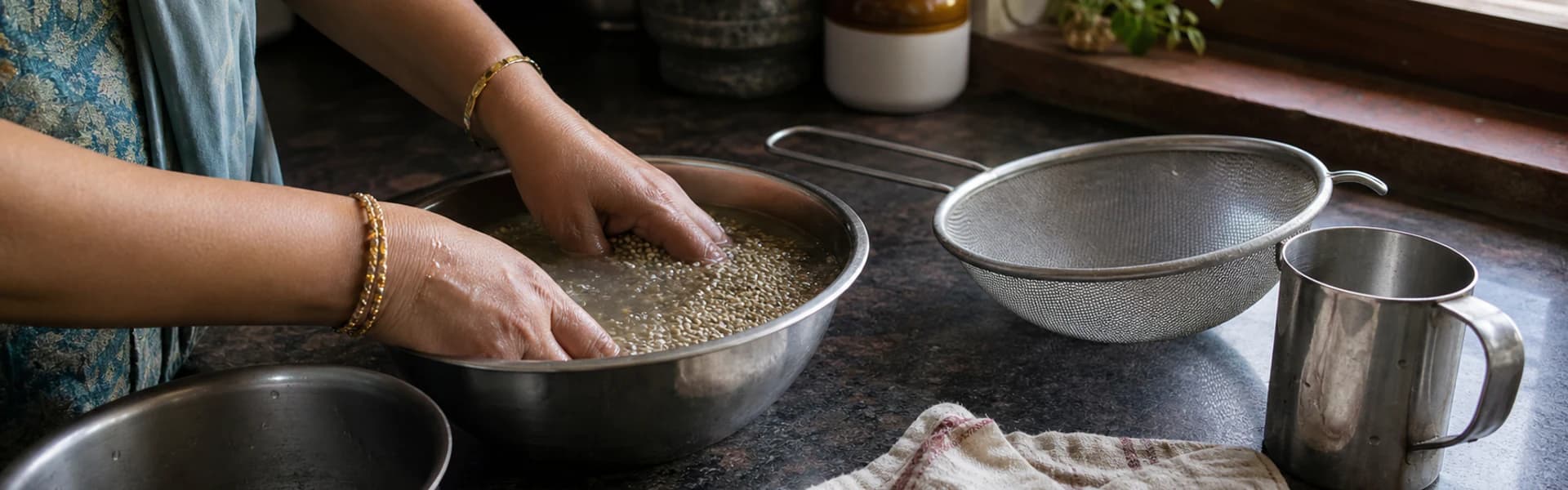
Soaking Guide
Why soak millets? Soaking serves two important purposes: it reduces anti-nutritional factors (particularly phytic acid, which can be reduced by 20-50% with proper soaking) and it softens the grain for faster, more even cooking. Phytic acid binds to minerals like iron, calcium, and zinc, reducing their bioavailability. Soaking frees these minerals for better absorption.
Quick Soak (30 min - 2 hours)
Suitable for most small millets: foxtail, little, kodo, barnyard, browntop, and proso millet. Rinse thoroughly, soak in room temperature water, then drain before cooking.
Long Soak (6-8 hours / overnight)
Recommended for whole grain sorghum and pearl millet when cooking as whole grains (not flour). Also recommended if you want maximum phytic acid reduction. Soak overnight, drain, and rinse before cooking.
Soaking Tips
- •Always discard the soaking water and rinse the millet before cooking.
- •Adding a tablespoon of lemon juice or apple cider vinegar to the soaking water can further enhance phytic acid reduction.
- •In hot weather, soak in the refrigerator to prevent fermentation (unless fermentation is desired, as for dosa batter).
Cooking Methods
Stovetop
- Rinse and drain the millet thoroughly.
- Bring the appropriate amount of water to a rolling boil in a heavy-bottomed pot.
- Add the millet and a pinch of salt. Stir once.
- Reduce heat to the lowest setting and cover tightly.
- Cook for the recommended time without lifting the lid.
- Turn off heat, let rest covered for 5 minutes, then fluff with a fork.
Pressure Cooker
- Rinse and drain the millet.
- Add millet, water (same ratio), and salt to the pressure cooker.
- Close the lid and cook on medium heat for 2-3 whistles.
- Turn off heat and let pressure release naturally (do not force open).
- Open the lid and fluff gently with a fork.
Pressure cooking is faster and works especially well for pearl millet and sorghum.
Rice Cooker
- Rinse and drain the millet.
- Add millet and water to the rice cooker bowl at the recommended ratio.
- Add a pinch of salt and a teaspoon of oil or ghee.
- Close the lid and start the regular cook cycle.
- Once the cooker switches to “warm,” let it rest for 10 minutes.
- Open and fluff with a fork. Serve.
Works well for foxtail, little, barnyard, and kodo millets.
Reducing Antinutrients
Millets contain phytic acid and tannins that can reduce mineral absorption. These simple traditional processing methods significantly reduce these compounds:
Soaking
Soaking millets for 6-8 hours reduces phytic acid content by 20-50%. The water activates the grain's own phytase enzymes, which break down phytic acid. Always discard the soaking water.
Germination / Sprouting
Sprouting millets for 24-48 hours is one of the most effective methods. It can reduce phytic acid by up to 60-70% while also increasing vitamin C, B vitamins, and overall protein digestibility. Finger millet (ragi) sprouts particularly well.
Fermentation
Traditional fermented preparations like dosa/idli batter (using millet instead of rice), ambali, and koozh dramatically reduce antinutrients. Fermentation for 12-24 hours can reduce phytic acid by 50-75% while adding beneficial probiotics.
Roasting / Dry Toasting
Dry roasting millets before cooking reduces tannins and also enhances their nutty flavor. This is a common practice in many traditional recipes (e.g., roasting foxtail millet before making upma or biryani).
Storage Guide
Uncooked Millets
Store in airtight containers in a cool, dry place away from direct sunlight.
Shelf life: 6-12 months
Cooked Millets
Store in sealed containers in the refrigerator. Can also be frozen in portion-sized bags for longer storage.
Fridge: 3-5 days / Freezer: up to 3 months
Millet Flour
Store in airtight containers in the refrigerator, as the exposed oils in flour can turn rancid faster than whole grains.
Shelf life: 2-3 months (refrigerated)
Substitution Guide
Millets can replace common grains in many dishes. Here is a guide to which millets work best as substitutes:
| Millet | Best Substitute For |
|---|---|
| Foxtail Millet | Rice |
| Little Millet | Rice |
| Barnyard Millet | Rice |
| Pearl Millet (flour) | Wheat flour (rotis) |
| Sorghum (flour) | Wheat flour (rotis, breads) |
| Finger Millet (flour) | Wheat / rice flour |
Pro Tips
- 1Cool cooked millet for resistant starch: Letting cooked millet cool before eating increases resistant starch content, which lowers the effective glycemic index and feeds beneficial gut bacteria. This is especially useful for people managing blood sugar.
- 2Toast before cooking for nuttier flavor: Dry roast millets in a pan for 3-4 minutes before adding water. This brings out a pleasant, nutty aroma and also helps the grains stay separate rather than becoming mushy.
- 3Add a pinch of oil while cooking: Adding half a teaspoon of ghee or oil to the cooking water prevents millets from sticking together and gives them a pleasant sheen. This is especially helpful for foxtail and little millet.
Disclaimer: This content is created with the assistance of AI and is based on published research, government sources, and traditional knowledge. While we strive for accuracy, always consult a healthcare professional for medical advice.